Serious Game • Therapeutic Design • 2024
A modular serious game that helps therapists build emotion-based sessions on the spot.
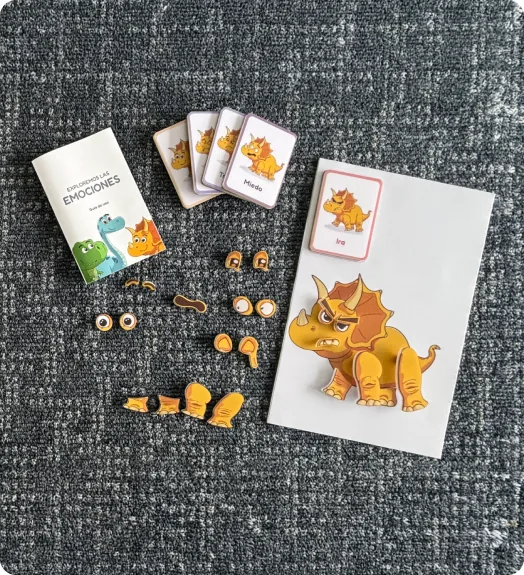
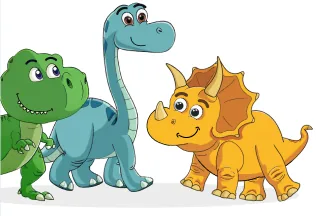
A reusable serious game composed of three magnetic dinosaur boards, 72 interchangeable face and body pieces, and emotion cards that let an autistic child identify joy, sadness, anger and fear, while the therapist runs the activity without planning it from scratch.
Designed as my Industrial Design Engineering graduation project with One to One, a Costa Rican therapy company, for psychologists working with children aged 6–9 on the autism spectrum.
Role
Research, product & interaction design, prototype and testing
Timeline
19 weeks · 2024
Target users
Psychologists and children aged 6–9 on the autism spectrum
Deliverables
Physical toolkit + interaction guide
Starting point
At One to One, psychologists were improvising materials for every session: cutting, printing and adapting activities by hand, one child at a time.
It worked, but it ate into hours they didn't have, and what they built rarely held up long enough to reuse.
No existing material was flexible enough to become a new activity without prep time.
None were designed around autism-specific sensory needs, just adapted as needed.
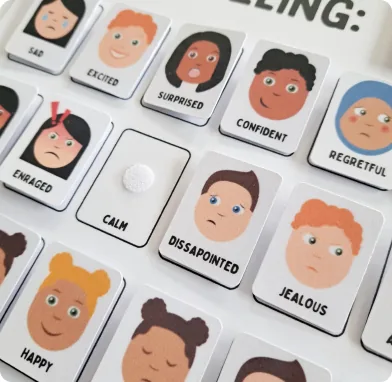
Who I designed for
The Child
Needs it to fit how they experience the world
Sensory sensitivities, motor skills and behavioral patterns vary from child to child, so the game had to work with those differences, not against them.
The Therapist
Needs it to flex on demand
A different child and a different goal every session, without spending planning time building a new activity each time.
What the project had to solve
The research made one thing clear: this toolkit had to work for both sides of the session.
It had to respond to both recurring therapist pain points and the practical requirements they needed, while staying clear, tactile and comfortable for autistic children to use.
Pain points
Pain point
Therapists were spending extra time outside sessions preparing materials.
Pain point
Handmade materials wore out quickly, so they needed to be constantly replaced.
Pain point
Most materials were child-specific, requiring new materials for each therapy.
Design requirements
Requirement
The toolkit had to be reusable.
Requirement
The toolkit had to be durable.
Requirement
The toolkit had to be versatile and adaptable.
Other stakeholder priorities
Additional needs from the stakeholder helped shape the final design.
Emotion-focused
Support work around four core emotions.
Child-engaging
Build on children's natural interest in dinosaurs.
Therapist-led
Flexible across goals and session types.
The design tension
Flexible enough for the therapist to build on the spot. Compatible enough for a child on the spectrum to actually use it.
The solution
After benchmarking existing therapy and play tools, exploring several design directions, and evaluating concepts against the project requirements, I arrived at my solution:
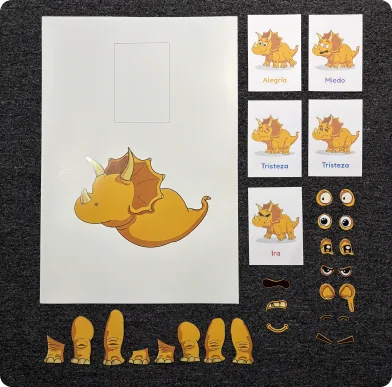
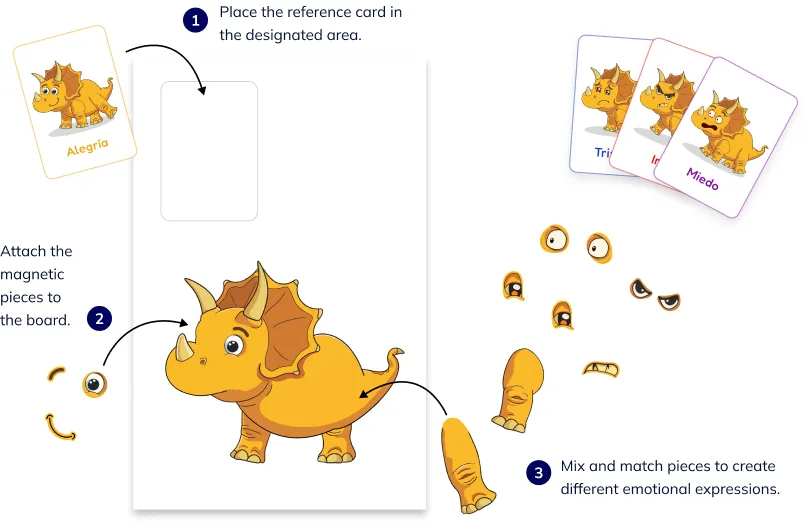
A modular magnetic toolkit for building emotional expressions during therapy sessions.
Multiple characters for role-play
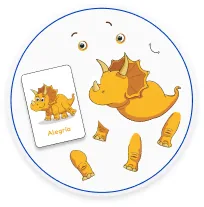
Interchangeable body and facial pieces
Emotion reference cards
Design concept
Magnetic board for building emotional expressions
Adaptability
- A dedicated area shows where to place the reference card on the board
- Thick, rigid pieces make handling easier
- Piece handling can adapt to each child's motor abilities
- Therapists can change cards based on the child's needs and session goals
Versatility
- Multiple ways to build each core emotion
- Mix and match facial and body expressions
- Use reference cards to recreate an emotion, or build expressions freely
- Different dinosaurs can be used individually or together to create different scenarios
Reusability
- Pieces are removable from the board rather than permanently attached
- Magnets can be added, removed and repositioned repeatedly
Durability
- Pieces are made from sturdy, hard-wearing materials
- Magnets allow the pieces to attach securely to the board without permanent adhesives
Visual style
- Simple 2D illustrations
- Clean cartoon-inspired aesthetic
- Minimal visual detail
- Clear and easy-to-read hierarchy
- Balanced color palette
- Exaggerated expressions to make emotions easier to recognize
User experience
- An instruction guide explains how to use the toolkit across different activities
- Pieces are designed to be easy to attach, remove and reposition
- Multiple combinations give children and therapists freedom to create
- Activities can be guided by the therapist using emotion cards as prompts
What's actually in the box
The final toolkit includes:
- 3 magnetic dinosaur boards: Triceratops, Brachiosaurus, and T. rex
- 72 interchangeable pieces: eyebrows, eyes, mouths, and legs
- 13 emotion cards covering joy, sadness, anger, and fear
- 1 therapist guide with suggested activities and use cases
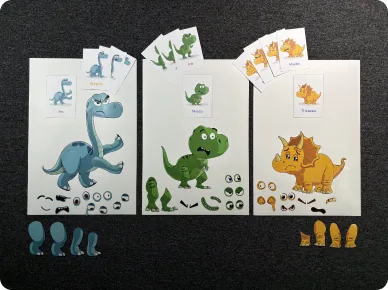
All three boards, magnetic pieces, and emotion cards ready for use.
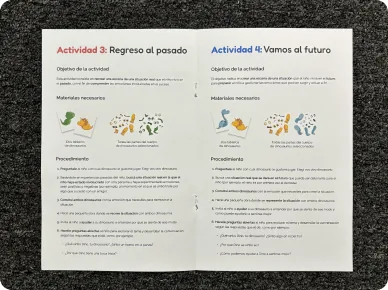
Suggested activities and prompts for different therapeutic goals.
How it's played
The toolkit can be used in different ways depending on the child and the session goal. The guide provides structured activities, while therapists can also create their own.
Testing process and key decisions
Testing helped surface a few key usability issues. These changes made the toolkit easier to handle, easier to understand, and more comfortable to use. Here are three of them:
A larger, vertical board made the system easier to use
Problem
The original board was too small and the system lacked orientation consistency between dinosaurs.
What changed
I moved to a larger tabloid-size format and standardized all three boards vertically.
Why it mattered
The toolkit became easier to manipulate, more consistent across characters, and more comfortable for different children to use.
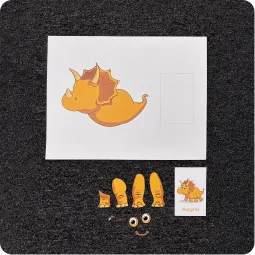
Before
Letter-size board, small pieces, and a side card slot made it harder to grab and less comfortable for left- or right-handed kids.
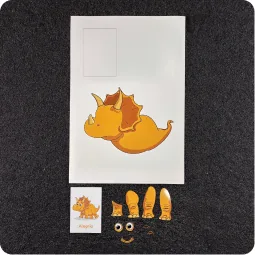
After
A larger vertical board created more working space, improved consistency across all three dinosaurs, and made the layout easier to use.
Larger eyebrows improved grip without losing expressiveness
Problem
The original eyebrow pieces were too small to handle comfortably.
What changed
I increased their size, while keeping one side slim enough to sit close to the eye. I kept eyebrows separate from the eyes to preserve more expressive combinations.
Why it mattered
The pieces became easier to use without reducing versatility or emotional readability.
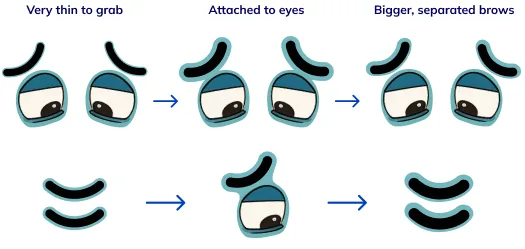
Before
Small eyebrow pieces were hard to grip and position, specially for small kids.
Transition
Combining the brow with the eye improved grip, but reduced expression flexibility.
After
Larger separate brows improved handling while preserving expression variety.
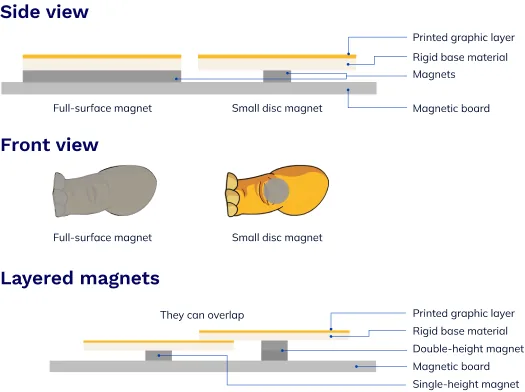
Raised magnets made the pieces easier to grab
Problem
The original magnets kept the pieces flat with the board, making them harder to pick up and layer.
What changed
I replaced the full-surface magnets with smaller disc magnets and introduced double-height magnets where pieces needed to overlap.
Why it mattered
The pieces became easier to grip, lift, and reposition, while layering created more flexibility when building facial & body expressions.
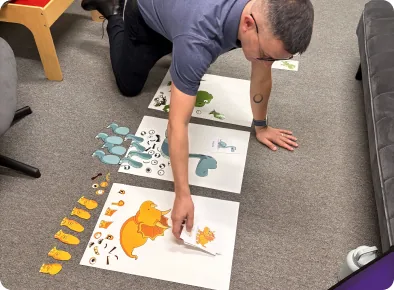
Putting the prototype through its paces with a psychologist. Naturally, the floor became part of the testing setup.
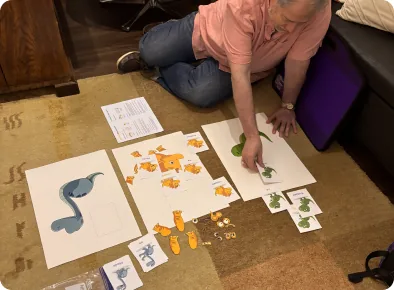
A second expert review, this time exploring how the toolkit could work across different activities and scenarios.
Results
I validated the final design through five expert-review sessions with four psychologists, combining qualitative feedback with a quantitative questionnaire. Overall, they responded positively to the toolkit's usefulness, clarity, and versatility.
Due to confidentiality requirements, I could not test directly with children. These findings therefore reflect expert evaluation and estimated impact, not clinical outcomes.
Expert reviews with 4 psychologists
Experts highlighted the system's versatility and potential to support emotion recognition in children.
Estimated reduction in prep time
Psychologists estimated that the reusable toolkit could significantly reduce the time spent preparing materials outside therapy sessions.
Rated the guide's clarity 5/5
All four psychologists found the instructions clear, easy to follow, and appropriate for therapeutic use.
Would use or recommend the toolkit
All four experts said they would use or recommend the toolkit in their practice.
Key takeaway
Overall Conclusion
The final design provides psychologists with a clear, versatile, and reusable tool for creating engaging emotion-recognition activities without rebuilding materials for every session.
Expert feedback suggests the toolkit is practical and feasible for real-world therapeutic use, while direct testing with children remains an important next step.
Behind the scenes
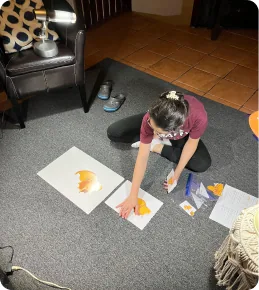
My very professional photo studio: two lamps balanced on chairs and no budget in sight.
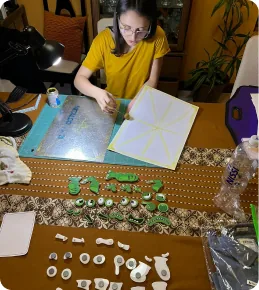
Final prototype assembly, powered by magnets, patience, and a very crowded table.
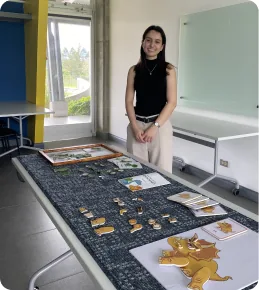
Presentation day :) Presented the final project and walked away with a perfect score, yay!
Questions about this project
One to One's psychologists were rebuilding fragile, child-specific emotion material by hand, outside every session. I wanted a reusable system flexible enough that they'd never have to start from scratch again, while making sure the game itself actually fit the sensory and behavioral needs of a child on the spectrum.
Across five sessions with four practicing psychologists, I tested handling, clarity and therapist comprehension, then compared reported prep time before and after. Confidentiality agreements meant I couldn't observe real therapy sessions, so this validates the concept as a professional tool, not a clinical outcome with children.
Run a carefully managed pilot with children present, therapist-led. More than one psychologist also flagged the dinosaur's real limit: it won't hook every child, and some therapy goals eventually need a human face instead. The best version of this system was never going to be the one with the most features. It was the one that could change without feeling chaotic.